
- 00
0000-00
What Is a Portable Gas Cylinder? Key Types, Safety Standards, and Common Industrial UsesWhat Is a Portable Gas Cylinder? Key Types, Safety Standards, and Common Industrial Uses
A portable gas cylinder is a compact, pressurized container designed for safe storage and controlled release of flammable gases like butane or propane—widely used in household insecticides, outdoor camping gear, and aerosol-based daily essentials. As a leading manufacturer in the daily chemical industry, Shandong Shanying Industrial Group produces high-quality, CE- and ISO-certified portable gas cylinders integrated into our aerosol insecticides and portable fuel cartridges. This article explores key types, global safety standards (including ISO 45001 and BPS), and real-world industrial applications—tailored for professionals and researchers evaluating reliable, compliant gas delivery solutions.Why “Portable Gas Cylinder” Searches Matter — And What Researchers Really Need to Know
When professionals search “portable gas cylinder,” they’re rarely seeking textbook definitions. They’re assessing supplier reliability, verifying regulatory alignment, or comparing technical specs for procurement decisions. For R&D managers, procurement officers, or regulatory compliance teams in the daily chemical sector, the core question is: Can this component meet strict international safety, performance, and traceability requirements across diverse product lines?
Shandong Shanying Industrial Group answers that question through vertical integration—not just manufacturing cylinders, but controlling tinplate printing, can-making, gas filling, and full-cycle quality testing. Our 500-million-can annual capacity isn’t just scale; it’s evidence of process stability, batch consistency, and audit-ready documentation—critical for importers navigating CE, BPS, or ASEAN regulatory gateways.
Not All Portable Gas Cylinders Are Equal: Three Functionally Distinct Types Used in Daily Chemicals
In the daily chemical industry, “portable gas cylinder” refers almost exclusively to single-use, sealed metal cartridges—not refillable LPG tanks or industrial bulk vessels. We categorize them by function, not just material:
1. Propellant Cartridges — Integrated into aerosol insecticides (e.g., flying insect sprays, ant & roach killers). These use ultra-pure butane/propane blends with precise vapor pressure (2.0–3.5 bar at 20°C) to ensure consistent spray pattern, droplet size, and active ingredient dispersion. Our cartridges undergo 100% helium leak testing before filling.
2. Fuel Cartridges — Designed for portable stoves, lighters, and camping gear. Higher butane concentration (≥95%) and tighter dimensional tolerances (±0.15 mm wall thickness) prevent valve misalignment during repeated ignition cycles. We supply these to OEMs requiring UL 217-compliant ignition safety margins.
3. Dual-Chamber Hybrid Units — Emerging in premium repellent systems (e.g., mosquito repellent liquid dispensers). One chamber holds active liquid; the other contains pressurized gas for metered, battery-free actuation. Requires specialized crimping and dual-seal validation—capabilities we’ve deployed since 2021 across EU and Philippine markets.
Safety Isn’t Optional—It’s Embedded: How Global Standards Translate to Real Manufacturing Controls
Compliance labels (CE, ISO 9001, ISO 45001, ISO 14001, BPS) signal adherence—but only if backed by verifiable process architecture. At Shanying, each standard drives specific operational safeguards:
ISO 45001 (Occupational Health & Safety) mandates our gas-filling line design: fully enclosed negative-pressure chambers, real-time combustible gas monitoring (0.1% LEL detection threshold), and automated emergency nitrogen purge—reducing operator exposure by >92% vs. open-filling alternatives.
BPS Philippines Certification goes beyond labeling—it requires quarterly third-party audits of raw material traceability (tinplate lot numbers linked to final cartridge batches), shelf-life validation under tropical humidity (40°C/85% RH for 24 months), and child-resistant actuator testing per ASTM D3475. We maintain 100% pass rates since 2019.
CE Marking (EN 417:2012 + EN 13303:2003) governs structural integrity: burst pressure ≥5x working pressure, drop-test resilience (1.5 m onto concrete, 3 orientations), and valve retention force ≥15 N. Our in-house lab performs 3,200+ annual destructive tests—data shared transparently with qualified buyers upon NDA.
Industrial Use Cases That Demand More Than Just “Gas in a Can”
For daily chemical manufacturers, portable gas cylinders are functional enablers—not commodities. Their performance directly impacts product efficacy, user safety, and brand liability:
In aerosol insecticides, inconsistent propellant pressure causes poor atomization, leading to residue buildup, nozzle clogging, or incomplete pest coverage. Our precision-filled cartridges maintain ±3% pressure variance across ambient temperatures from –10°C to 50°C—validated via thermal cycling chambers.
In mosquito repellent liquid dispensers, gas-driven metering must deliver exact 0.2 mL/h dosage over 360 hours. Variance >±5% risks under-protection or rapid depletion. Our hybrid units achieve ±1.8% accuracy—certified by SGS Guangzhou for WHO-recommended vector control devices.
In car care aerosols (brake cleaners, degreasers), solvent compatibility is non-negotiable. Standard butane degrades certain esters and glycol ethers. We formulate custom propellant blends—including isobutane-dimethyl ether co-solvents—validated via 6-month compatibility soak testing per ISO 11545.
How to Evaluate a Supplier Beyond Brochures and Certificates
For researchers and procurement teams, due diligence means looking past certifications to operational reality:
Ask for batch-specific test reports, not generic certificates. A genuine ISO 9001 facility logs every gas fill—pressure, temperature, humidity, operator ID, machine ID. Request anonymized samples from three recent production lots.
Verify vertical integration depth. Printing, can-making, and filling under one roof eliminates cross-supplier variability. At Shanying, tinplate enters our facility → printed → formed → leak-tested → filled → capped → packaged—all within 72 hours, with full digital traceability.
Confirm regulatory responsiveness. When the Philippines updated BPS Annex G (2023) on valve corrosion resistance, we requalified all export-bound cartridges within 11 days—not weeks. That speed reflects embedded QA workflows, not reactive paperwork.Conclusion: A Portable Gas Cylinder Is a System—Not a Component
A portable gas cylinder in the daily chemical context is far more than a metal can holding gas. It’s a tightly engineered subsystem—integrating metallurgy, fluid dynamics, polymer science, and regulatory intelligence. For information researchers evaluating suppliers, the decisive factors aren’t just “what it is,” but how consistently it performs under real-world stress, how transparently its compliance is verified, and how deeply its manufacturer owns end-to-end quality control.
Shandong Shanying Industrial Group treats every cartridge as a mission-critical interface between chemistry and consumer safety. With certified processes, auditable data, and application-specific engineering—from mosquito coil enhancers to hospital-grade disinfectant aerosols—we enable partners to launch compliant, effective, and trusted products—without compromising on scale or scrutiny.

- 00
0000-00
Which Standards Apply to Butane Gas Cartridges for Transport, Storage, and Labeling?A shipment of camping cartridges is ready to leave the warehouse, but the paperwork, outer cartons, and individual cans do not appear to tell the same story. One document calls the product “butane,” another uses “fuel canister,” and a warehouse label simply says “flammable.” This is a common point where a routine dispatch can become a compliance problem. A Butane Gas Cartridge may be technically sound and still be delayed, rejected, repacked, or mishandled if its transport classification, storage controls, and labeling are not aligned with the destination market and transport mode.
The difficulty is that there is no single global rulebook printed on every cartridge. The applicable requirements depend on whether the goods move by road, rail, sea, or air; whether they are sold in the European Union, the United States, or another market; whether the cartridge is a pierceable type, a bayonet cartridge, or a threaded valve cartridge; and whether it is being assessed as a transport package, a workplace chemical, or a consumer product. The practical solution is to separate these questions rather than trying to solve them with one generic “flammable gas” label.
Start by identifying the product in regulatory terms
Before selecting marks, labels, or shipping papers, confirm exactly what is inside the package. A portable cartridge generally contains liquefied petroleum gas, which may be butane, isobutane, propane, or a blend. The precise composition affects the safety data sheet, hazard communication, and sometimes the transport description. “Butane” should not be used as a shortcut if the actual filling blend is different.
For transport, small receptacles containing flammable gas are commonly assigned to UN 2037, RECEPTACLES, SMALL, CONTAINING GAS, in Class 2.1. That entry is widely used under international dangerous-goods frameworks, but the final classification should be verified against the current version of the regulation governing the shipment. A cartridge with a valve, a cartridge without a valve, and a refillable cylinder are not automatically treated in the same way.
It is also important to distinguish the product from an aerosol. Aerosol cans may fall under UN 1950, while a fuel cartridge designed to supply a stove or lamp is usually evaluated under the small-receptacles entry. Confusing the two can lead to incorrect documentation, unsuitable packaging instructions, and labels that do not match the shipment declaration.

Construction standards and transport rules answer different questions
Product standards address whether the cartridge itself is designed and manufactured appropriately for its intended appliance and gas service. In many markets, EN 417 is a key reference for non-refillable metallic cartridges for liquefied petroleum gases used with portable appliances. It covers requirements related to cartridge construction, valves where applicable, testing, marking, and instructions. It is particularly relevant for cartridges used with camping stoves, lanterns, and similar portable equipment.
Transport regulations, by contrast, focus on the hazards presented during carriage: classification, approved packaging, package marks, labels, documentation, segregation, loading, and emergency information. Meeting EN 417 does not remove the need to comply with ADR, IMDG Code, IATA Dangerous Goods Regulations, or national transport rules. Likewise, a package prepared for dangerous-goods transport does not prove that the cartridge meets the product standard expected by the selling market.
For goods placed on the European market, the Pressure Equipment Directive may also need to be considered where its scope applies. The correct regulatory route depends on the product design and applicable exclusions or categories. This should be determined during product compliance review rather than after production has been completed.
Transport mode changes the compliance path
A practical mistake is to prepare all export orders as though they will move under the same requirements. Road transport to a neighboring country, containerized sea freight, and air shipment can involve very different constraints even when the cartons contain the same Butane Gas Cartridge.
Transport situation Main framework to review Points that commonly need confirmation Road transport in Europe ADR and applicable national provisions UN number, proper shipping name, Class 2.1 label, package marks, limited-quantity eligibility, vehicle and document requirements Sea freight IMDG Code Dangerous-goods declaration, stowage, segregation, container packing, marine pollutant status where relevant, and carrier acceptance rules Air freight IATA Dangerous Goods Regulations and operator rules Whether the product is permitted, applicable packing instruction, quantity limits, package testing, and airline-specific restrictions Domestic transport in the United States US DOT hazardous materials regulations Hazard communication, packaging authorization, shipping paper requirements, and small-quantity or consumer commodity provisions where applicable Air transport deserves special caution. Flammable-gas cartridges can be subject to strict limitations, and acceptance may depend on the exact article, package configuration, net quantity, and carrier policy. A product accepted by a sea-freight forwarder should never be assumed acceptable for air transport without a separate review.
Limited quantity provisions can simplify some transport requirements, but they are not a universal exemption. Eligibility depends on the dangerous-goods entry, package size, inner and outer packaging configuration, and the regulation in force. If limited quantity is used, the package marking must match that provision. It should not be combined casually with full dangerous-goods labels merely because both seem safety-related.
Packaging review should go beyond the individual can
A cartridge may pass leak and pressure testing, yet the transport package can still create an incident risk. Cartons must protect cartridges from movement, crushing, accidental valve operation, abrasion, and heat exposure during normal handling. The required performance level and packaging instruction depend on the applicable transport regulation, but the working principle is consistent: the outer package must prevent foreseeable damage during loading, stacking, vibration, and unloading.
For valve cartridges, confirm that the valve is protected against unintentional discharge. For pierceable cartridges, review whether the cap, seal, and carton arrangement prevent contact damage. Mixed packing with unrelated goods should be assessed carefully, especially if those goods can puncture metal, generate heat, or create ignition risk.
The package review should also include palletization. Stretch film can stabilize cartons, but excessive wrapping around a heat-exposed load can complicate inspection and ventilation. Pallets should remain stable without allowing cartons to overhang, and damaged cartons should be removed before dispatch rather than hidden within a wrapped load.
Storage is not just a warehouse housekeeping issue
Most storage incidents begin with conditions that seemed ordinary: cartons placed near a roller door in direct sunlight, stock held beside an ignition source, a poorly ventilated room, or damaged cans returned to inventory without inspection. Butane is heavier than air. If gas escapes, it can travel and collect in low areas, pits, drains, or enclosed spaces. The risk is not limited to the point where the leak occurs.
Storage controls should therefore be based on the cartridge’s flammable-gas hazard, the total quantity stored, the building arrangement, and local fire-code requirements. Many facilities use standards and codes such as NFPA 58 in the United States or locally adopted fire and building regulations as reference points. The governing requirement is the one enforced by the competent local authority, insurer, or site permit.
In day-to-day operation, several controls deserve attention:
- Store cartons in a cool, dry, well-ventilated area away from direct heat and sources of ignition.
- Keep cartridges away from oxidizers and materials that may intensify a fire.
- Do not store leaking, corroded, deeply dented, or heat-damaged cartridges with saleable stock.
- Protect stock from mechanical impact by forklifts, pallet jacks, and sharp warehouse fixtures.
- Maintain clear identification of the storage area and make emergency procedures available to relevant personnel.
- Review whether floor drains, pits, or enclosed low points require additional controls because leaked gas may accumulate there.
Temperature language on the product label must be respected. A maximum storage or exposure temperature is not merely consumer guidance; it is linked to internal pressure and safe handling. If a load has been exposed to unusual heat during transport or storage, a visual inspection alone may not be enough. The affected stock should be isolated and evaluated under the company’s established nonconforming-product procedure.
Labeling has three separate purposes
A clear label system normally has to serve three audiences: transport handlers, workplace users, and consumers. These audiences may see different information, and their requirements are not interchangeable.
Transport communication is generally placed on the outer package. Depending on the transport mode and applicable provisions, this may include the UN number, proper shipping name, Class 2.1 flammable-gas label, limited-quantity mark, orientation arrows where required, and other marks specified by the relevant code. The exact format, dimensions, durability, and placement rules should be checked against the current regulation. A label hidden beneath tape, straps, or shrink wrap may not be considered compliant.
Workplace chemical communication is generally addressed through the safety data sheet and the chemical label required in the destination market. In the European Union, this often involves the Classification, Labelling and Packaging Regulation. In the United States, OSHA Hazard Communication requirements may apply in workplace supply chains. Typical elements can include the flame pictogram, signal word, hazard statements, precautionary statements, supplier identification, and product identifier. The wording and language requirements must match the market where the product is placed on sale.
Consumer-use labeling should help the user avoid predictable misuse. For a camping cartridge, this commonly includes compatibility information, connection instructions, warnings against refilling if the cartridge is non-refillable, advice not to expose the cartridge to excessive heat, instructions to keep it away from ignition sources, and directions for disposal. Claims of compatibility should be precise. A cartridge should not imply universal compatibility with appliances using a different valve, seal geometry, or operating pressure design.
Traceability makes an incident easier to contain
Lot coding is sometimes treated as a production detail, but it becomes essential when a shipment is questioned or a defect is reported. A legible code can link the cartridge to filling records, gas batch information, can manufacturing records, valve components, leak-testing records, packing date, and destination shipment. Without this link, even a minor complaint can require a much broader investigation than necessary.
Traceability marks should remain readable through normal distribution. If a batch code is printed only on an outer carton, it may be lost when cartons are split for retail. If it appears only on the cartridge but cannot be read after ordinary handling, it has limited value. The best location depends on product design and market expectations, but permanence and legibility should be tested as part of packaging validation.
A practical review before release
When a new market, new carrier, or new cartridge format is introduced, the most reliable approach is to review the product in sequence. First, confirm the gas composition and transport classification. Next, identify the route and transport modes, including any warehouse or transshipment stages. Then verify the packaging instruction, package marks, shipping documentation, and carrier acceptance conditions. After that, compare the cartridge marking, consumer label, and safety data sheet against the destination-market requirements.
Finally, walk through the physical process rather than reviewing documents only. Look at a finished carton, a pallet, a warehouse location, a shipping document, and an individual cartridge side by side. If the product description, hazard information, lot code, and handling instructions conflict at any point, resolve the discrepancy before goods leave the site.
For manufacturers with integrated can making, printing, filling, and final packing operations, this review is especially useful because a label change, valve change, gas-blend adjustment, or carton redesign can affect more than one compliance step. Controlled specifications, retained label artwork, and documented release checks help prevent a small packaging revision from creating a transport or storage gap later.
The central lesson is simple: a Butane Gas Cartridge should be evaluated as a pressurized flammable-gas product throughout its lifecycle, not only when it is filled. Product construction standards, dangerous-goods rules, storage controls, and market labeling requirements overlap, but each addresses a different risk. Treating them as connected parts of one release process is usually the clearest way to reduce avoidable delays and handling hazards.
- 00
0000-00
Do portable gas cylinders need different inspection intervals for retail useFor retail operations, Portable Gas Cylinder inspection intervals should be set with safety, compliance, and product condition in mind. The short answer is yes: retail use often justifies a different inspection rhythm than factory storage, bulk warehousing, or end-user household use. But “different” does not automatically mean “more frequent” in every case. The right interval depends on how the cylinders are stored, how often they are handled, how long they remain on shelves, and whether the market requires a specific technical standard.
That distinction matters because retail is a mixed environment. A cylinder may sit in a clean, controlled display area for weeks, then be moved, stacked, picked, transported, and returned. Every touchpoint adds risk. For quality control and safety managers, the real task is not to copy a generic schedule, but to define an inspection plan that matches the actual exposure profile of the product.
Why retail handling changes the inspection logic
Portable gas cylinders used in retail channels are usually small, mobile, and fast-moving. That makes them more vulnerable to cosmetic damage, valve contamination, label loss, carton deformation, and leak-related concerns caused by repeated handling. In a wholesale warehouse, cylinders may remain palletized and relatively stable. In retail, they are often unpacked, stocked, restocked, and repositioned more frequently.
This is why inspection intervals are often separated into two layers. One layer is the formal periodic inspection required by the applicable standard, regulation, or internal QA system. The other is the practical in-process check that happens at receiving, before shelving, during stock rotation, and after any incident such as a drop, corrosion finding, or suspected leakage. Retail operations need both. Relying only on scheduled audits is usually too late.
What usually drives a shorter interval
Several conditions tend to justify tighter inspection spacing: high humidity storage, temperature fluctuation, long shelf time, frequent transport between branches, and mixed inventory lots with different production dates. If the cylinder contains butane or a similar flammable gas, managers also need to watch for packaging integrity and signs that the filling or sealing process may have been stressed during distribution.
In practice, retail teams often discover problems not because the cylinder failed in use, but because the outer condition changed before sale. A dented body, rust at the seam, poor cap fit, or a damaged printed label can become an early warning sign. For this reason, inspection is not only about the cylinder itself; it is also about the route the product has taken through the supply chain.
What a meaningful inspection interval should actually reflect
A useful interval is never just a calendar number. It should reflect the condition under which the Portable Gas Cylinder is stored and sold. For example, a controlled indoor retail stockroom with limited turnover may support a less aggressive visual inspection cycle than an open display environment with frequent customer contact. On the other hand, a fast-moving convenience retail channel may need more frequent spot checks because products are handled by more people and moved more often.
The same logic applies across markets. Some destinations place more emphasis on packaging integrity and labeling, while others focus on transport safety, product conformity, or local import and certification requirements. If a company exports to multiple countries and regions, one common interval rarely fits every market without adjustment. That is why inspection schedules should be linked to destination-specific documentation and release criteria, not only to internal habit.
Retail condition Inspection emphasis Typical concern Controlled stockroom Periodic visual check, batch traceability Storage stability, packaging condition Open shelf display More frequent handling checks Dents, label damage, cap loosening High-turnover retail Receiving and pre-sale checks Mixed lots, transport wear, misplacement Cross-border retail supply Document and conformity review Standard differences, labeling, approval status The technical questions behind the schedule
When managers ask whether retail cylinders need different inspection intervals, they are usually asking a deeper question: what standard applies, and what failure mode matters most? For portable gas cylinders, the answer may involve product construction, filling quality, leak integrity, shelf-life behavior, and the technical rules of the target market. If the cylinder is used in camping products, home convenience products, or pest control-related applications, the acceptable risk profile may also differ by use case.
This is where manufacturing capability becomes relevant, even if the final decision sits with QA or compliance teams. A supplier with an integrated chain for tinplate printing, can making, and gas filling can control more variables before the cylinder reaches retail. Shandong Shanying Industrial Group Co., Ltd., founded in March 1998 in Jining, Shandong Province, operates across R&D, production, and sales, with an international standard laboratory and production lines for can making and gas filling. In practical terms, that kind of setup helps with process stability, but it does not remove the need for retail-side inspection. It just means the upstream quality control has more depth.
The same applies to certifications such as CE, ISO 9001, ISO 45001, and ISO 14001, or market-specific approvals like BPS for the Philippines. These are important signals, but they are not a substitute for retail inspection planning. Certification can support the compliance framework; it cannot replace the operational judgment needed when products are stocked, shipped, and displayed in real retail conditions.
A practical way to set intervals without overcomplicating the job
Most quality teams get better results when they separate the schedule into three checkpoints: incoming inspection, in-storage monitoring, and pre-dispatch or pre-sale verification. The receiving check catches transport damage and batch mix-ups. The storage check looks for corrosion, deformation, or packaging failure over time. The final check confirms that the unit is still fit to move into the retail channel. If a cylinder has been dropped, exposed to heat, or returned by a customer, it should be treated as a special-case item rather than waiting for the next routine interval.
For managers, the real challenge is documenting when an interval changes. A new warehouse layout, a different carrier, a longer dwell time at border clearance, or a seasonal humidity shift can all justify revising the inspection plan. That revision should be recorded with the reason, the affected SKU, and the person responsible. This keeps the process defensible during audits and reduces the chance that “routine” becomes a blind spot.
What good practice looks like in retail operations
Good practice is usually simple: define the standard, define the environment, and inspect the risks that are most likely to happen there. For a Portable Gas Cylinder in retail use, that often means paying attention to seals, body condition, labeling, traceability, and storage conditions rather than only counting calendar days. If the product is part of a wider daily chemical or outdoor product portfolio, QA teams should also align inspection records with the rest of the line so that anomalies can be spotted early across product families.
In the end, the question is not whether retail cylinders need a different inspection interval in theory. They usually do. The more useful question is whether your current interval reflects actual retail exposure, market rules, and product condition. If it does not, the schedule should be adjusted before the next shipment moves through the chain.

- 00
0000-00
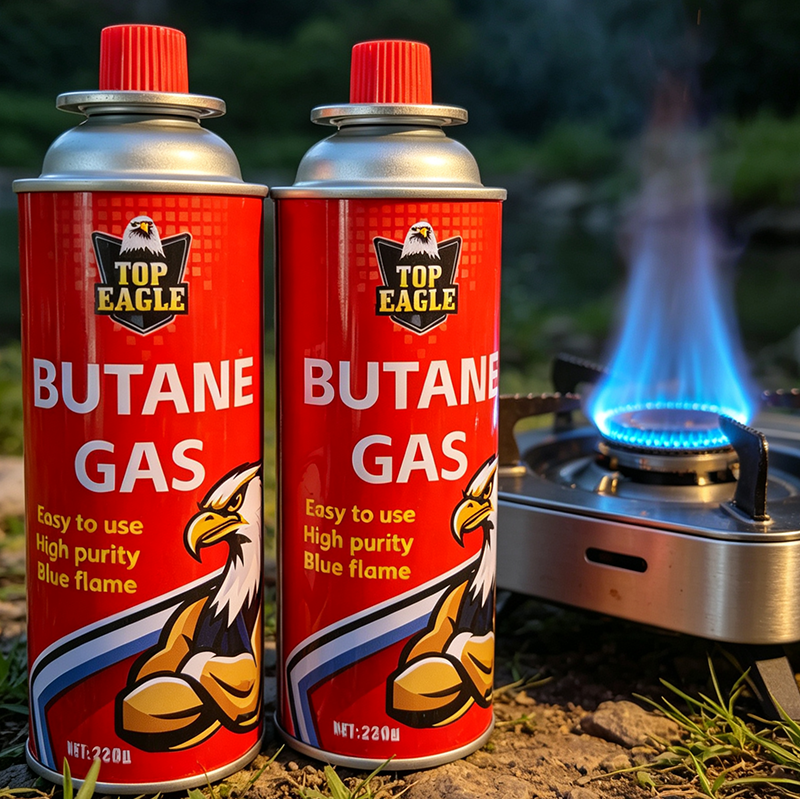
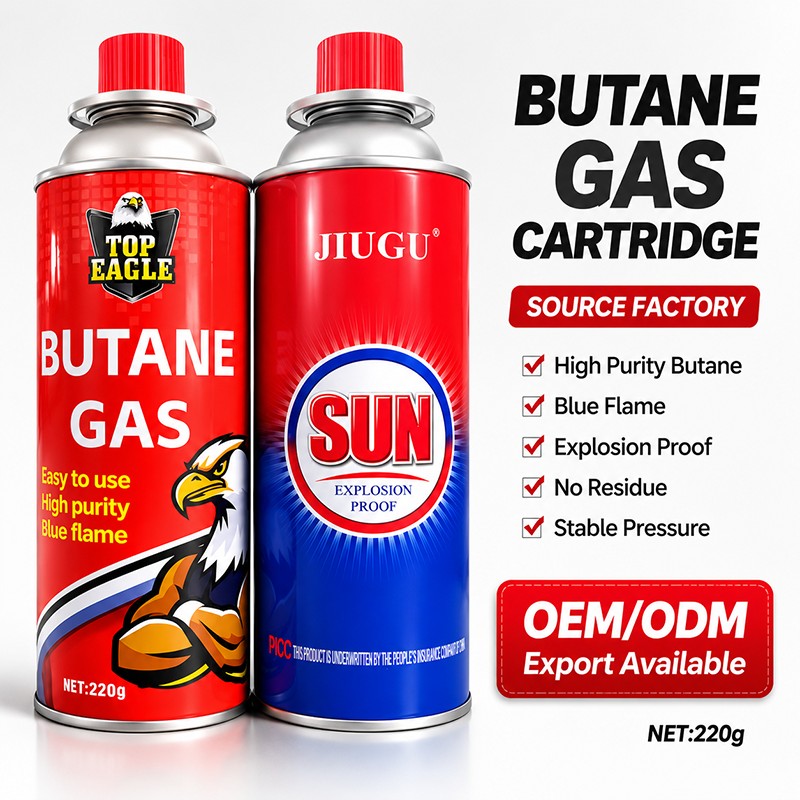
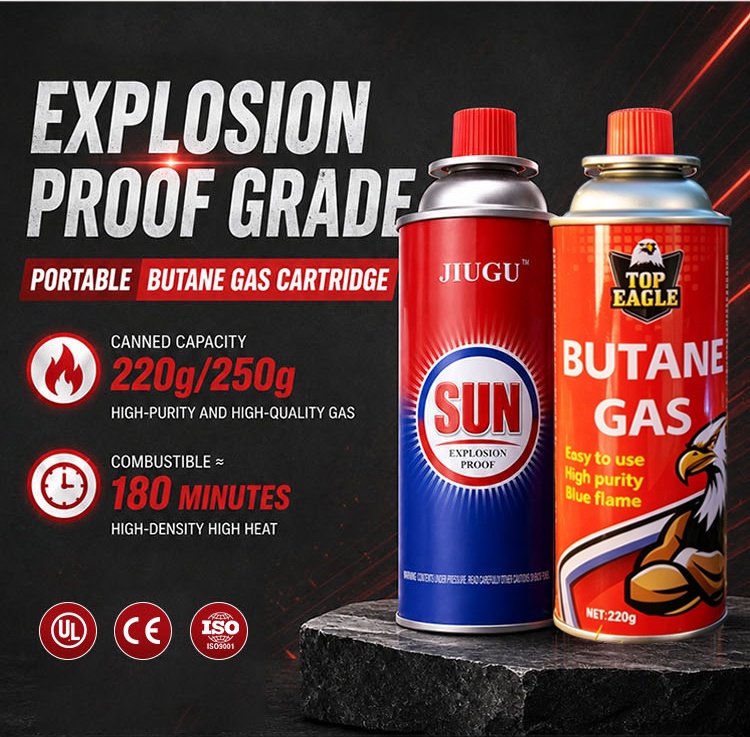
Is the portable butane gas cylinder safe?The portable butane gas cylinder, with its advantages of being small, lightweight, and ready-to-use, has become a common fuel equipment for outdoor camping, home simple meals, and temporary cooking. Do people care about the safety of portable butane gas cylinders? The answer is: The compliant and genuine gas cylinders themselves meet safety standards, conforming to the national GB/T 38522-2020 outdoor gas appliance standards. As long as the right product is selected, the operation is standardized, and the gas cylinder is stored properly, most safety risks can be avoided. On the contrary, improper use may hide hidden dangers.
Regular portable butane gas cylinders have undergone strict pressure resistance, heat resistance, and leak prevention tests. They are equipped with an overpressure cut-off protection device. The purity of the butane in the cylinder is not less than 95%. When the pressure exceeds the limit, it will automatically release pressure and cut off the gas supply, eliminating the risk of explosion. They are suitable for use with card-type stoves and have an authoritative guarantee of factory quality. Most safety accidents on the market are caused by unqualified and inferior gas cylinders, mixed use of stoves, and improper operation, rather than the product itself being unsafe.

To use safely, first, control the selection process. Make sure to choose genuine products with production qualifications, production dates, shelf life, and prohibited re-filling marks. Reject unmarked, damaged, rusted, or expired gas cylinders. At the same time, match them with the same specification dedicated stoves to avoid interface incompatibility leading to gas leakage. Secondly, strictly follow the usage norms. Do not use them in enclosed spaces, basements, or near open flames, high-temperature heat sources, and flammable items. Do not tip or collide the gas cylinder during use. Check the sealing of the interface before lighting the fire.
Daily storage should be placed in a cool, dry, and ventilated place. Avoid direct sunlight and high-temperature baking. Do not re-fill the gas cylinder. In summary, portable butane gas cylinders are not dangerous hazardous materials. By choosing genuine products, following norms, and properly storing them, you can use them with peace of mind, balancing convenience and safety.
- 00
0000-00
Can insecticide aerosol be sprayed upside down?When many people conduct mosquito control at home, they often encounter situations where they need to spray insecticides in narrow spaces, corners, and low areas. They tend to spray the insecticide aerosol upside down. Many users are puzzled about whether it is safe to spray insecticide aerosols upside down. The answer is: Ordinary household insecticide aerosols are strictly prohibited from being sprayed upside down. Only a few products with specific labels indicating that they can be sprayed upside down are exceptions. Blindly spraying upside down can cause safety hazards and significantly reduce the effectiveness of mosquito control.
From the perspective of the product structure and principle, conventional insecticide aerosols consist of liquid medicine, propellant, and infusion tube. When used normally upright, the infusion tube is immersed in the liquid medicine and can evenly extract the liquid medicine for atomization and spraying. Once the canister is inverted, the infusion tube is separated from the liquid layer and directly extracts the high-pressure propellant, resulting in not only non-uniform spraying but also the spraying of not the atomized liquid medicine but high-pressure gas and liquid base solution. This causes uneven spraying and accumulation of the liquid medicine, which not only fails to effectively control mosquitoes and kill insects but also leads to waste of the liquid medicine.
More importantly, spraying upside down poses a significant safety risk. When the high-pressure liquid base solution is sprayed out directly, it will quickly vaporize and disperse, causing the concentration of the drug in the air to soar instantly. This can easily irritate the human respiratory tract and skin, causing dizziness, coughing, allergies, and other discomforts. At the same time, high-concentration drugs exposed to open flames are highly likely to ignite and cause fire or explosion. In addition, long-term spraying upside down can damage the valve and clog the nozzle, leading to leakage of the gas tank and its.
In daily use, the canister should be kept upright, and sprayed evenly at a distance of about 20 centimeters from the mosquito control object. For low areas such as corners and under the bed, the inclination angle can be adjusted. Do not completely invert it. After use, open the windows for ventilation and keep away from open flames and heat sources. In conclusion, ordinary household insecticide aerosols are strictly prohibited from being sprayed upside down. Following proper operation can ensure both the effectiveness of mosquito control and home safety.

First class quality service and professional after-sales team.
In order to provide you the suitable machine , pls offer below message for us
Get in Touch
We respect your confidentiality and all information are protected.